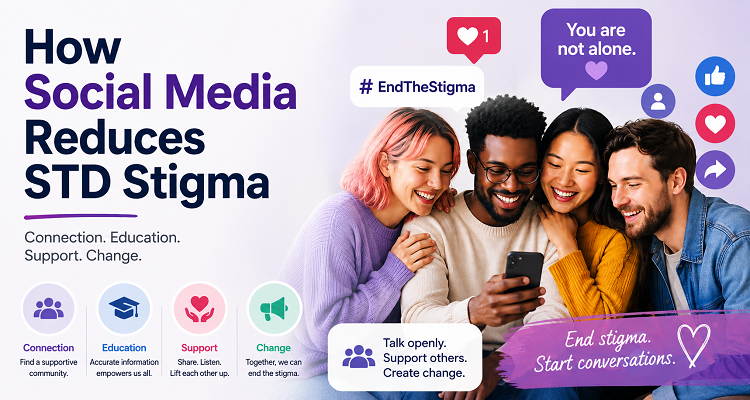
For years, Sexually Transmitted Diseases and sexually transmitted infections (STIs) have been surrounded by silence, shame, and misunderstanding. Many people who receive an STD diagnosis often struggle not only with the medical condition itself but also with the fear of being judged by friends, family, partners, and society. This social stigma can be emotionally exhausting and may prevent individuals from looking for treatment, sharing their experiences, or accessing support.
Today, social media is changing that reality. Platforms such as Facebook, Instagram, TikTok, YouTube, Reddit, and online forums have become powerful tools for education, awareness, and community building. Millions of people now use social media to learn about sexual health, share personal experiences, and challenge outdated stereotypes.
The conversation around sexual health is becoming more open than ever before. Through honest discussions, expert guidance, and supportive communities, social media is helping people understand that having an STD does not define a person’s worth, character, or future.
Why STD Stigma Still Exists
Before exploring solutions, it is important to understand why stigma exists in the first place.
Many misconceptions about STDs stem from decades of misinformation, inadequate sex education, and cultural taboos. People often associate STDs with irresponsible behaviour, even though infections can affect anyone regardless of age, relationship status, education level, or lifestyle.
These misunderstandings contribute to:
- Fear of testing
- Delayed treatment
- Mental health struggles
- Relationship anxiety
- Social isolation
The result is a cycle where people remain silent, allowing myths and misinformation to continue spreading.
This is where Social Media and Sexual Health education can make a significant difference.
The Rise of Social Media as a Health Education Tool
In the past, people relied mainly on doctors, schools, or printed materials for sexual health information. While these sources remain important, social media has expanded access to information dramatically.
Today, health professionals, educators, advocates, and individuals living with STDs share accurate information daily. This creates learning opportunities that simply did not exist a decade ago.
Through videos, infographics, podcasts, and personal stories, users can gain a better understanding of:
- STD prevention
- Testing procedures
- Treatment options
- Relationship communication
- Emotional well-being
This increased access supports STD Education Online and helps people make informed decisions about their health.
Personal Stories Humanize the Experience
One of the most powerful ways social media reduces stigma is by giving real people a voice.
When individuals openly discuss living with herpes, HPV, HIV, chlamydia, or other STDs, they help others realize they are not alone. Personal experiences often resonate more deeply than statistics because they show the human side of the issue.
A person scrolling through social media may discover stories from individuals who:
- Have healthy relationships
- Build families
- Maintain successful careers
- Enjoy fulfilling social lives
These stories challenge stereotypes and support Reducing STD Stigma by demonstrating that people with STDs are ordinary individuals living normal lives.
Authentic storytelling creates empathy, understanding, and acceptance.
Breaking Harmful Myths Through Education
Many people still believe myths about STDs that are scientifically inaccurate.
Social media allows healthcare providers and educators to quickly correct misinformation. Educational content can reach thousands or even millions of users within hours.
Common myths include:
- Only promiscuous people get STDs.
- An STD diagnosis ruins your dating life.
- Symptoms are always obvious.
- Testing is only necessary for certain groups.
Educational creators regularly address these misconceptions and provide evidence-based information. Their efforts contribute to Breaking STI Myths and help audiences separate fact from fiction.
When accurate information becomes widely available, fear and judgment begin to decrease.
Creating Safe Spaces for Support
Receiving an STD diagnosis can feel isolating. Many people hesitate to discuss their experiences with family or friends because they fear rejection.
Online communities help fill this gap.
Across Facebook groups, Reddit communities, forums, and support networks, individuals can connect with others who understand what they are experiencing.
These spaces provide:
- Emotional support
- Dating advice
- Disclosure guidance
- Mental health encouragement
- Treatment discussions
The growth of STD Support Communities has made it easier for people to find acceptance and understanding.
Knowing that thousands of others share similar experiences can significantly reduce feelings of shame and loneliness.
Encouraging Testing and Early Treatment
Fear of judgment often prevents people from getting tested.
Social media campaigns frequently normalize STD testing by portraying it as a routine part of healthcare rather than something embarrassing.
Health influencers, doctors, and advocates regularly share messages such as:
“Getting tested is responsible.”
“Knowing your status protects you and your partners.”
“Sexual health is health.”
These campaigns help remove fear surrounding testing and support broader Sexual Health Awareness efforts.
When stigma decreases, more people look at testing and treatment earlier, improving overall public health outcomes.
The Power of Online Awareness Campaigns
Hashtag campaigns have become a major force in public health advocacy.
Campaigns focused on sexual health encourage users to share experiences, educational resources, and supportive messages. These initiatives create visibility and normalize conversations that were once considered taboo.
Examples include campaigns promoting:
- Routine testing
- HIV awareness
- Herpes education
- HPV vaccination
- Sexual wellness discussions
These efforts contribute to Online STD Awareness Campaigns that reach diverse audiences worldwide.
The viral nature of social media means that one educational post can influence thousands of people within a short period of time.
Giving Experts a Direct Voice
Another advantage of social media is direct access to healthcare professionals.
Doctors, nurses, public health specialists, and sexual health educators now share evidence-based information through videos, livestreams, and question-and-answer sessions.
This helps users receive reliable information rather than relying solely on rumours or misinformation.
Expert content strengthens public understanding of:
- STD symptoms
- Prevention methods
- Treatment effectiveness
- Relationship concerns
- Mental health support
This professional guidance increases trust and promotes healthier attitudes toward Living With an STD.
Supporting Mental Health and Self-Acceptance
The emotional impact of stigma can be severe.
People diagnosed with an STD often experience:
- Anxiety
- Depression
- Low self-esteem
- Fear of rejection
- Social withdrawal
Social media can play a positive role in recovery by exposing individuals to encouraging messages and supportive communities.
Seeing others confidently discuss their diagnosis can help users develop self-acceptance and resilience.
Many advocates emphasize that an STD diagnosis is a medical condition, not a moral judgment.
This message is central to STD Stigma Awareness and encourages healthier emotional outcomes for affected individuals.
Building Inclusive Conversations About Sexual Health
Modern social media conversations increasingly focus on inclusivity and compassion.
Rather than using fear-based messaging, many educators now emphasize empathy, education, and respect.
Inclusive discussions help audiences understand that:
- Anyone can contract an STD.
- Sexual health affects people from all backgrounds.
- Support is more effective than judgment.
- Open communication improves health outcomes.
This shift contributes to ending STI Discrimination and creates a more supportive environment for everyone.
What Community Discussions Reveal
Online communities provide valuable insight into how people truly feel about STD stigma.
Many discussions across health forums and support groups reveal common themes:
- People fear social judgment more than the infection itself.
- Honest conversations often improve relationships.
- Education reduces anxiety.
- Supportive communities improve mental well-being.
- Sharing personal experiences helps others feel less alone.
Community members frequently report that connecting with others online transformed their outlook and helped them regain confidence.
These shared experiences demonstrate the positive impact of social media on reducing stigma and promoting acceptance.
How Individuals Can Use Social Media Responsibly
While social media offers many benefits, users should approach health information carefully.
Consider these best practices:
- Follow verified healthcare professionals.
- Check information against trusted medical sources.
- Avoid spreading unverified claims.
- Respect others’ privacy.
- Engage respectfully in discussions.
Responsible participation helps maintain supportive environments and strengthens efforts toward reducing STD Stigma.
Frequently Asked Questions
How does social media help reduce STD stigma?
Social media creates opportunities for education, personal storytelling, and community support. These factors help normalize conversations about sexual health and challenge harmful stereotypes.
Can social media improve sexual health awareness?
Yes. Educational posts, expert content, and awareness campaigns contribute significantly to Sexual Health Awareness by providing accessible information to large audiences.
Are online STD support groups helpful?
Many people find online communities extremely beneficial. They offer emotional support, practical advice, and reassurance from individuals with similar experiences.
Why is STD education important?
Education helps people understand transmission, prevention, testing, and treatment. Accurate information also supports Breaking STI Myths and reduces fear-based misconceptions.
Can social media encourage STD testing?
Yes. Many campaigns normalize testing and promote routine sexual health screenings, helping individuals look care earlier.
What role do personal stories play in reducing stigma?
Personal stories humanize the experience and show that people with STDs can maintain healthy relationships, careers, and fulfilling lives.
How can we help end STI discrimination?
Supporting education, avoiding judgmental language, sharing accurate information, and promoting empathy all contribute to ending STI Discrimination.
Conclusion
Social media has become one of the most effective tools for challenging outdated beliefs about Sexually Transmitted Infections. Through education, storytelling, advocacy, and community support, it is helping millions of people better understand sexual health and reject harmful stereotypes.
The growth of STD Stigma Awareness, STD Education Online, STD Support Communities, and Online STD Awareness Campaigns demonstrates the positive influence digital platforms can have on public health. As more individuals share their experiences and more experts provide accurate information, society moves closer to reducing STD Stigma, breaking STI Myths, promoting Sexual Health Awareness, supporting people Living With an STD, and ultimately ending STI Discrimination.
Every conversation, post, and shared story has the potential to replace shame with understanding and silence with support.